All posts by cmperkins

Client Director at TMP Worldwide UK

5 ways money can buy you happiness

Most of us work to earn money to fund a lifestyle. We often think that if we just had more money we’d be happier. Well, that depends on what you do with it.

An interesting challenge for banks right now is how they provide us with advice and services that help us manage our money better; rather than simply spend it.

Michael Norton, a professor at Harvard, has conducted some interesting research on how we can use money more wisely and increase our happiness. Here are his five principles:

  1. Buy experiences; not stuff. The anticipation and looking forward to the experience usually provides longer lasting gratification than the purchase of an item. And having the experience is interesting and enjoyable. Plus, looking back on an experience usually provides a better memory than the time when we bought a bigger TV.
  2. Buy time. It might be your dream to get out of the city and buy a big house in the country. But have you considered you might be buying yourself a two-hour commute? Perhaps a job move might require a drop in salary, but it gives you more time with family or less time travelling – which more than offsets the reduction in income.
  3. Pay now, consume later. Credit cards, of course, do the opposite – the instant hit with the bill that follows afterwards. Have you ever paid for a holiday when you’ve booked it and then when it comes time to go it almost feels like it’s free? When you’ve got money, use it to pay for things (or experiences!) you’ll make use of later.
  4. Make it a treat. We’ve all got into spending habits – coffee, wine, clothes – but these regular transactions become mundane. They lose the thrill they once provided. The way to get excited about them again is to give them up for a while. Take a week off from coffee and treat yourself next Monday morning. It will taste so good! Making things a treat involves spending less money and you’ll get more happiness out of it when you do go back to it!
  5. Spend it on someone else. Spending money on someone else reliably increases the spender’s happiness. And it can be quite a small amount to get a big reaction from the recipient, whether that’s a loved one, a donation to charity or some other altruistic expenditure.

These ideas come from Michael Norton’s book with Elizabeth Dunn, ‘Happy Money‘. He’s now focused on working with companies to help them educate and encourage their employees how to get more out of their money. As an employer, creating happier employees will have a direct impact on retention, engagement and customer service.

For some organisations – banks in particular – doing the same with customers could have huge benefits. Helping customers become better with their finances helps make them better, lower risk customers, more likely to take out higher margin products in future.

So it turns out money can buy us happiness, just not in the way we expected.

All these small things – how a phone call can make the difference between hiring and losing top talent

I really liked the idea behind the movie’ Sliding Doors’. How one small event could dramatically change the course of your life.

0020_sliding-doors

For me, that could have been a phone call (or an email) which, if it had come just a little sooner, could have resulted in me taking one job offer and turning down another.

Before accepting my current role I explored some options with the big four consultancy firms. They’re unusual in the recruitment world in that they’re all pretty homogeneous, they’re all going after the same people and they all have near-identical structures and grades, so it’s very easy to compare like with like.

Their respective brands and employment propositions are really the only things they can use to differentiate themselves – the work is, essentially, the same.

If you’re involved in the operation of your organisation’s recruitment function, I’d like to offer my own experience with three of these firms as a reminder from the front line as to how important the small details can be in you successfully attracting talent; or losing it by a whisker.

When I started my job search I thought these firms represented the pinnacle of the consulting profession and that’s where I wanted to work. One of them felt they could somehow struggle on without me, but I successfully engaged with three others (all direct with the firms through network connections, not through agencies).

That’s when it became apparent that they run very similar recruitment operations – but deliver very different experiences.

Each assigns a Recruitment Manager to liaise with the candidate through a multi-stage selection process. One made a really strong impression: very personable, interested in me, always kept me updated, shared useful information about the next stage, always called back when she said she would, etc. One did OK, but wasn’t quite as on the ball, and one was appalling – uncontactable, repeatedly failing to honour call backs, letting the process slip by weeks at a time.

Ironically, the worst relationship manager worked at the firm I was most engaged with originally. I had been interested in their work and bought into their brand for the last ten years! I also had the strongest network connection here – a hiring manager I had known for over two years. Unfortunately, they managed to undo all that goodwill in a very short space of time. I was onto my third Recruitment Manager by the end of the process (the other two having left – one within two months of starting!) The experience was abysmal. Interview feedback by text message and poor excuses relayed from senior managers as to why the process was taking so long. It quickly became clear that if this was how they ran their recruitment operation, this was not somewhere I would enjoy working.

Unfortunately, despite my hugely positive experience at one of the other firms, I decided to withdraw from their process. It became clear at the first interview that they wanted global mobility and this was not something I could commit to, so withdrawing seemed like the right thing to do. Although I am left with a very positive impression of the firm, having started from a neutral base. In fact, I was so impressed, I think this firm deserves recognition for running such a well managed process (albeit my research is from a sample of one) – hats off to EY!

Things did progress very positively with the third firm, though. They did a very good job of moving things along, keeping me updated and building my engagement with the firm and the role.

At the same time, I started in the selection process for my current role. The person managing this process also did a great job of keeping things moving and keeping me engaged. I got to the point of waiting on confirming final interviews for both opportunities at about the same time.

The consultancy firm took a few days longer to schedule the final interview – despite me pushing them along a bit because, ideally, I wanted to conclude this process before the other one.

In that few days the manager of my new opportunity conducted the final interview, came back with an offer and concluded negotiations before the consultancy firm could confirm a final interview date. That manager is now my boss!

One process started in January, the other one in February and it all came down to about 72 hours in April. My impression was that the Recruitment Manager and the Scheduling Team were chasing Partners for availability to book the final interview. If they chased a bit harder or the Partners had prioritised returning the call or responding to the email a bit higher, who knows if their investment in putting me through their selection process would have paid off for them?

iStock_000002882255Small

The point is that sometimes I think in-house recruiters lack an appreciation of the urgency with which you need to move to hire the best talent. I’m not saying I’m the world’s greatest to fill the role at the consultancy firm, but they’d invested a fair amount of resource in getting me round the course and then fell at the final hurdle – never giving themselves the chance to see if they could hook me at the final step.  All because someone couldn’t confirm an Outlook appointment within a few days of receiving it. If it was a request from a client would it have taken so long to respond?

If we have pivotal roles, that it’s hard to find talent to fill, we must impress – on everyone involved in the hiring process – that every hour counts. That person is probably pursuing more than just your vacancy – do you want the competition to nab them, or do you want to make sure that you’ve got first dibs on persuading them to come and join you?


How intelligent is your career?

I’d be willing to bet money that right now you’re probably spending more time planning your holiday than planning your career.

travel books feathered desat

In fact, for most people, it’s not just now, it’s on an annual basis! We spend more time thinking about where we’ll go, where we’ll stay and how we’ll get there for our two-week vacation than we do for the remaining fifty weeks of the year we’re at work.

What the last few years has shown us is that it pays to do a little proactive thinking around your career path; rather than wait for these unpredictable, turbulent times to hit us with a curve ball. Obviously, no-one has 20:20 vision when it comes to seeing into the future, but you can use some proven tools to be better prepared and be more in control.

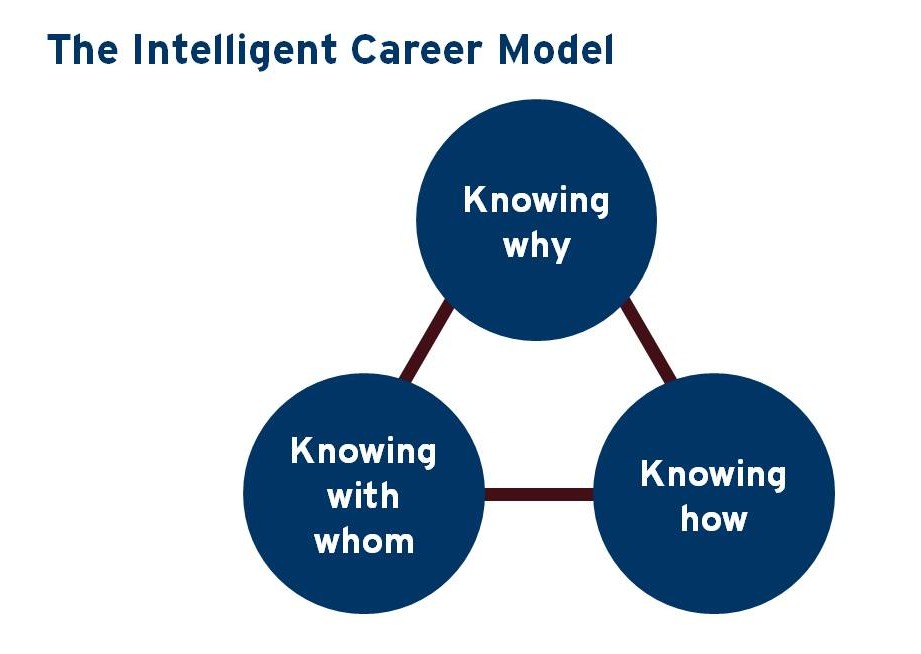
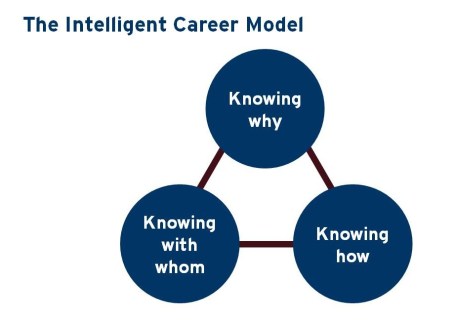
The best I’ve ever come across is the Intelligent Career Model. This was developed in the early nineties by Arthur, Claman and DeFilippi in response to the last recession. It was based on ideas popular at the time around the Intelligent Enterprise – if an enterprise can learn from events round about it, so it will be better prepared to grow. The same is true of individuals and their careers. You can use this model yourself or when coaching others.
Intelligent Career Model

I like the Intelligent Career Model, because it’s easy to understand and provides really powerful insights to help you plan your next steps.

It’s based on having intelligence around three aspects of work: knowing why you work, knowing how you work best and knowing with whom you work best. Here’s a brief explanation of each, along with a short exercise to help you develop each kind of intelligence.

Knowing why: this is all about your values and drivers. What gets you out of bed in the morning? What makes you want to go and do great work? A career based on our values leads to much more fulfilment than doing work we can’t really engage and connect with on a deeper level.

Exercise: make a list of all the things that are important to you about work – whatever they might be. This might include making lots of money, being in a position of power, working for a prestigious brand or being a recognised expert in something. It can also include other aspects such as having an easy journey to work, being able to balance work and home life, having opportunities to develop and grow or working in a very sociable environment.

Come up with a list of at least 10-12 values. Now whittle that down to 5-6. What are the most important aspects for you? Which ones could you really not do without if you wanted a fulfilling job?

Those ‘most important’ values are the ones to base any future career decision on. If a promotion, job move or change of direction isn’t pressing all of those buttons you’re not going to find it very engaging for long.

Knowing how: this is all about your strengths and skills. We work best when playing to our strengths and deploying skills we enjoy using. You may have already done a strengths-based assessment in the past. Dig it out and review it – it will provide you with a reminder of how you work at your best.

Exercise: Draw a box in the middle of a piece of paper with four quadrants around it. Label the quadrants as follows: highly competent/enjoy using; requires development/enjoy using; highly competent/don’t enjoy using; and requires development/don’t enjoy using.

Now have a look at your CV or your LinkedIn profile and work through each role you’ve held, noting down all the skills that role called for. Any skills you feel indifferent about go in the box in the middle. But any that you have reasonably strong feelings about you should write in one of the four quadrants accordingly.

The competent/enjoy quadrant represents your strengths. The development/enjoy quadrant indicates career development opportunities. The competent/don’t enjoy quadrant are your exhausted skills and the development/don’t enjoy skills you should just steer clear of.

What we’re looking for are roles that allow you to use your strengths AND give you an opportunity to develop new skills you know you’d enjoy. We want minimal use of exhausted skills, as these don’t hold any enjoyment for you – even though you’re good at them, and don’t really want to have to do anything in the development/don’t enjoy quadrant. Especially if it’s a core component of the job.

This then becomes another decision making tool to help you weigh up or go looking for any future career opportunity.

Knowing with whom: this is all about the environment and the people you work best with. Relaxed, informal creative types or disciplined places with very smart, rational managers? The goal here is to uncover the right culture for you. A great job in the wrong kind of environment isn’t going to work for you longer term.

Exercise: for this we’re going to map your career and look for the themes and key influences that contributed to your career highs and lows. Draw a timeline across the centre of a page and mark it with an appropriate scale representing the years from when your career began to now. Draw a vertical axis representing career satisfaction and enjoyment from very high to very low.

Now plot your career, year by year or job by job, marking how enjoyable it was. When you look at the high points and the lows, add notes explaining why – was it the nature of the work, your line manager, your colleagues, the culture, etc?

This gives us further insights into what kind of environments and with whom you work best.

Pulling it all together

So now you have the three different kinds of intelligence that should enable you to plan what you want to do next with your career. First of all, assess your current role against each area – is it ticking all the boxes around your values? Are you mostly using skills you enjoy and are good at and is there scope for development? And do you find the environment and the people a good match?

Now you can use this intelligence to decide what next. If your current role scores highly on all three counts, is it likely to do so for the foreseeable future? Are there any risks to the stability or continuity your current role offers to be fulfilling?

If so, or if the current role is deficient in some way, what do you need to plug the gap? Closer alignment with your values, an opportunity to use or learn different skills or a different culture?

Use this framework to find out if the right combination exists elsewhere in your organisation or if you’re going to have to move to find it.

The Intelligent Career Model is a great tool to help make better informed career decisions. If you need to make time to work through it, why not do it when you’re on holiday?


Wally Olins on Employer Brand

I was searching for something on Amazon when Wally Olins’ ‘Brand New’ popped up in my ‘You might also like…’ list. At work we’d just had a debate about whether Employer Brand and Corporate Brand were distinctly separate things or just one and the same. So I thought I would read the latest musings of this master of Corporate Brand – made all the more poignant by his passing last month just after it was published.

Whilst Olins doesn’t mention the concept of Employer Brand per se, a lot of what he talks about is highly relevant for those involved in attracting and engaging workers with a brand. Here’s my summary of his insights in that context:

Wally Olins’ take on brand is absolutely aligned with others currently looking specifically at the power of your organisation’s identity in relation to your employees. He starts off with his articulation of the concept of ‘Brand’ – making it clear that it is so much more than just a logo. Trust and authenticity are central. Creating an authentic ‘Talent Brand’ is a core component of Kevin Keohane’s model in ‘Brand and Talent’.

He then discusses the importance of how we consume a brand – largely through our experience of interacting with the people who represent it. This is the central idea in Ian Buckingham’s ‘Brand Champions’.

He then moves on to look at the level of scrutiny consumers are putting companies under. The sheer volume of data and behind the scenes insight available now makes it easy for customers to learn far more about a company than what the PR and Marketing departments put out. He cautions that the ease with which disgruntled customers can mobilise a mass movement online should act as an incentive to be more trustworthy and authentic. The same is true for employees. LinkedIn and Glassdoor make it easy for potential employees to connect with real employees and find out what the employment experience is really like – not just what the recruitment advertising promises.

Of course, companies can dig up similar insights or potential customers or employees – credit checks, social media following, etc. “Mutual exposure” is how he sums it up – “There’s just no point in hiding anymore.”

Despite how much employers and customers/employees can get to know about each other, he laments the fact that we seem to have less and less personal contact. The drive to automate, outsource and increase efficiency has put more distance between the ability of organisations to have meaningful social exchanges with people – a point which is just as relevant to a candidate wading through an impersonal online application process as it is to a customer trying to print a return label from a self-service help and support portal.

Having summed up his views on the current state on branding, Olins then comes to what is, for me, a great call to action for what we should strive for. Five short points that can help you do a superior job with your (employer) brand:

  1. Knowing who you are
  2. Talking, listening and being engaged
  3. Showing who you are
  4. Embracing everything you do
  5. Managing it and making it work

His ideas for how we can get better at these five points are worth reading. It’s largely common sense – clearly not common practice – but expressed by someone with experience of what really works in branding and identity that few can match.

He brings these points to life with wit, insight and engaging stories that often reveal the ridiculousness of what branding has become. Everything from the automated text messages his mobile provider sends to pilots’ pre-flight announcements helps you see how lost many companies have become in their attempts to make us engage with their brands. The parallels in recruitment marketing, candidate experience and employment value propositions are all too easy to draw!

There’s inspiration here too for how we can become more imaginative in how we talk and how we act when trying to attract and engage customers or employees.

Olins then deals with two extremes – both of which are relevant from an employer’s perspective. He highlights how the errors big brands are making and the direction of travel for social media and online tools create incredible opportunities for new brands or challenger brands. They can exploit these opportunities to steal a march on their bigger competitors and occupy a space in the branding world that gives them a competitive edge.

The other extreme  is how lessons from Olins’ work on country and place branding can be applied to big companies. He was well known, and often derided, for his work for national and local Governments, helping them to brand their ‘place’. But if you think managing a brand for a large, complex organisation is difficult, imagine trying to do it for a whole country!

His ideas for how to engage disparate stakeholders, get everyone communicating the same messages and how to align behaviours and experiences behind what the brand stands for will make interesting reading for anyone trying to do the same in a big corporate environment.

The book then closes with his own thoughts on his career, and you have to wonder if he had a feeling that it would be the last book he would write.

He very humbly describes an illustrious career that pretty much set the standard for what good work on branding and corporate identify should be like. Wally Olins was one of the first people to just get what branding was about. His relevance to those of us focused on the employment side of corporate identity is summed up neatly in his description of what he realised after visiting different clients’ steel plants in India in the sixties. He was fascinated by how the environment and how employees behaved gave him a sense of what each organisation stood for, even though they all produced exactly the same thing:


“That is, looking back on it, when I began for the first time to sense that a corporation communicates what it is through everything that it does.”

Wally Olins

Is your careers site responsive to mobile devices?

Responsive infographic

What would you do if money were no object? Alan Watts on finding career fulfilment

Quite simply, this is three minutes of advice from Alan Watts on what should guide you in choosing a career path.

The power of the divergent

How recruiting more difference can help you out-perform the rest

Diversity is a hot topic. There are numerous sound reasons why you should be aiming to create a more diverse workforce (and I’m not disputing any of them). What I haven’t seen up to now is compelling evidence as to the impact greater diversity can have on performance. But it does!

Scott Page’s 2007 Princeton study found that more diverse groups performed better than more homogenous ones in critical areas like problem-solving, conflict resolution and creativity – but only if they are well managed.

And an April 2009 study in American Sociological Review showed that diversity helped to increase sales and profit: companies with the most ethnically diverse workforces achieved nearly 15 times more sales revenue than those with the lowest levels of diversity. Sales revenue increased by between three and nine per cent for every percentage point increase in the rate of diversity amongst the workforce (up to the rate represented in the customer population).

The more diverse the workforce, the larger the customer base – companies with greater gender diversity in particular had more customers and higher average sales than the least diverse companies.

However, the very thing that leads to these performance gains also creates a problem – diverse teams are harder to manage and more prone to dysfunction because of the communication barriers inherent in a group of people with varying views and backgrounds (Polzer, Harvard Business Review, July 2008).

So clearly there are multiple benefits to seeking to recruit a more diverse workforce, but to reap the full benefit it will be important to support managers in how to handle more mixed groups and how to draw out the full potential of all the divergent views and experiences you have to tap into.

How we do that is a separate issue, but if you need more hard evidence or reasons to enrol more people in your efforts to increase diversity, use the above.

Does your EVP help build Career Capital?

On a couple of occasions recently I’ve seen this phrase trotted out: “What if we train our people and they leave? vs What if we don’t and they stay?”

Nice sentiment, but I think there’s a deeper – and far more significant – driver behind this that many employers are failing to embrace. Everyone knows jobs for life are long gone. People need to develop the agility and multi-faceted employability to thrive in unpredictable times. Counter-intuitively, investing in your employees to give them portable skills and experiences that make them more resilient, in case they need to find another job, actually makes them more loyal and committed to you. This is Career Capital.

Inkson and Arthur coined the term in 2001, but it’s had surprisingly little exposure. Career Capital describes the value we build for ourselves as we acquire skills and experience. As we add to it, we become more attractive to future employers.

I think most people are inherently aware of their own Career Capital – their own marketability. And an employer that actively helps them build their asset base, safeguarding them against any future career shocks that may occur, is rewarded with more loyalty.

Recognising this as a powerful element of the psychological contract is beneficial to both parties. If the employer says, ‘We’ll develop your skills in line with what we need as a business, but this will also help you achieve your future career objectives – whatever they might be’, most sensible employees will think, ‘That’s great! Not only am I developing in my current role; but I also have more to offer other employers in future. I like this approach, I’m going to stick around to see what other aspects of my employability I can enhance while I’m here.’

Of course, this assumes the employee and line manager have had a decent conversation about career goals, preferences for development areas and future opportunities within the firm (which we know doesn’t always happen!) But if it does, both parties are mutually invested in growing the assets in each employee. The organisation benefits for as long as it needs those skills and abilities; and the employee benefits by being better able to land a new role when the time comes to move on.

Managers might be scared about having these conversations, feel vulnerable that their direct reports might be after their jobs or don’t want to encourage a valuable member of their team to transfer internally. They should be reminded that if they don’t have these conversations to find out how their people most want to develop, they’re going to leave to find that advancement elsewhere anyway.

This needn’t be costly either. Small adjustments and on-the-job opportunities to develop can be low-cost or no-cost ways to help your people add to their Career Capital. Reallocating tasks and responsibilities amongst a team can help play to individual strengths or provide stretch assignments for people; short secondments or project work can develop the desired skills and offer new experiences (and network connections); and mentoring can work very well. It also provides opportunities for mentors to add to their Career Capital as well as benefits for the mentee.

Research also shows that 75% of people are prepared to invest their own time and resources in their development. So if you’re offering opportunities to build Career Capital consider asking for a contribution from the employee – such as time outside working hours, if not an actual financial contribution.

The final benefit to committing to invest in building employees’ Career Capital is the positive impact it will have on your employer brand when they do leave. Think about how favourably you recall a former employer who invested in you in some way that has improved your ability to further your career. Have you ever recommended them to others or talked in glowing terms about your time there? Wouldn’t you like your alumni to say the same about you?

So, think about the learning and development opportunities you provide your people as investments in their Career Capital fund. Explain them as such. You might be surprised at the positive effect you’ll have on engagement, loyalty and commitment.

Mission critical – the case for an integrated EVP

Imagine your company is a planet, populated by your workforce. And I am one of billions of inter-planetary space travellers looking for a planet to settle on and work.

Your planet is broadcasting signals, sending people into space and establishing satellite outposts to try and persuade other travellers to trade with it, or come and settle.

I pick up some of your broadcasts, speak to some of your people – or other travellers who’ve visited or traded with your planet – and form a favourable impression of your planet (brand). I move into orbit and notice that some of your signals are appealing to me to come and work on your planet (talent brand).

I decide to enter your atmosphere. My journey to your planet could be quick and smooth (my recruitment experience); or it could be bumpy and take ages – to the point that I might have second thoughts, fire my rocket boosters and go to explore other planets instead.

If I do land on your planet, I am greeted by a welcoming committee (onboarding experience). Then I am sent to work on part of your planet. I might move around a bit to different areas and do different things with a variety of your citizens (work experience).

At some point you are either going to ask me to leave if you no longer need my skills and expertise, banish me for doing something wrong or failing to perform, or I’m going to pick up signals from another planet that seems more appealing and decide to blast off (leaving experience).

As I travel through space I will tell the people I meet about your planet, or I may even start broadcasting my own signals about my experience.

In short, my experience of your world has been coloured by everything from those first signals I picked up to how you dealt with me when I was leaving.

Now let’s consider who and what is responsible for my impression along each step of my journey:

Brand Marketing, advertising, PR, websites, branches, employees, former employees, customers and former customers
Talent Brand HR, recruiters, careers website, recruitment advertising, employees and former employees, social media, word of mouth, etc
Recruitment experience Careers website, HR, social media presence, job boards, employee referrals, recruitment agencies, outsourced providers, university careers offices, etc
Onboarding experience HR, L&D, line manager, colleagues, intranet, senior leaders, IT/facilities, etc
Work experience Line manager, colleagues, functional/department head, HR, L&D, senior leaders, Finance, IT/Facilities, internal communications,
Leaving experience Line manager, colleagues, HR, PR/news.social media


All of these elements contribute to the employee lifecycle experience, but there is no single owner of the experience who can manage it all. In fact, in my experience, different stakeholders in the employee lifecycle provide employees with very different – even contradictory – experiences. These range from the original promises made to candidates versus the actual work experience; to the official ‘corporate’ induction process versus the line manager’s induction process.

Therefore, to manage and control the process as effectively as possible – to stand the best chance of creating a long-lasting and positive experience for both the organisation and the employee – doesn’t it make sense for each stakeholder to draw on a common, underlying employment value proposition?

If such a thing were to exist in the organisation, and all the stakeholders attempted to create an experience for employees based on its principles, then greater alignment would exist between the promise makers (branding and recruitment efforts) and the promise keepers (HR, line managers and fellow employees).

Assess your EVP and employer brand with the Marketing Exchange Circle

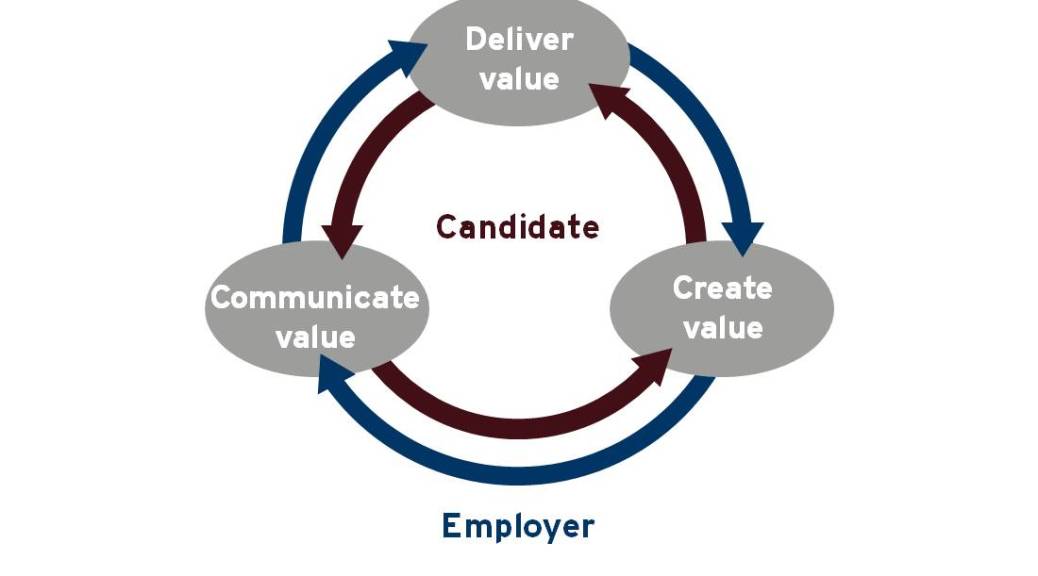
Most explanations of the marketing exchange process only explain a simple, single transaction: I give you currency in exchange for a product or service I value. The Marketing Exchange Circle, whilst still simple, explains the whole value creation process and is particularly relevant for people developing an employment value proposition (EVP) or employer brand. It was introduced to me a long time ago by one of my Marketing lecturers – Don Bathie (its creator).

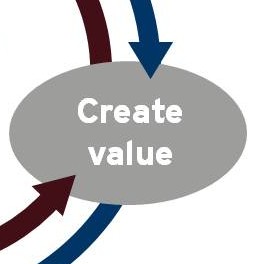
First of all, the employer has to create something of value – the proposition. The offer to the talent marketplace to come and work here.

Marketing Exchange Circle

In my experience, the most critical element of this is making it different and distinctive from your competitors (the competition for talent, not necessarily the competitors for your consumers).

Marketing Exchange Circle

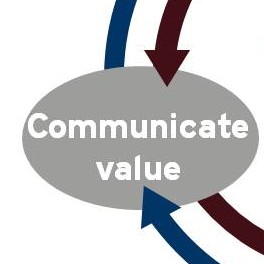
Then you have to communicate this value to the marketplace. You decide on the messages, the media, etc to convey the value you offer to the people you most want to attract, in the most compelling way. This is the promise you are making to potential employees.

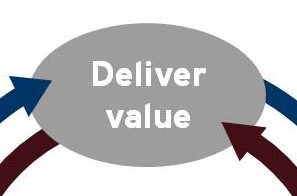
Then, crucially, you have to deliver value. You have to keep your promise. And this includes everything from the onboarding experience you provide, the work environment and how the person’s line manager behaves, to the sort of work the person will be doing and how they will be rewarded, developed and recognised.

You will also have noticed that there’s a cycle going in the other direction. This represents the candidate and the exchange that takes place at each point in the circle.

Marketing Exchange Circle

Firstly, the candidate has to create something of value for the employer. This is the ‘talent’ they offer – the skills and experience they have accumulated that make them attractive to the organisation.

Then they have to deliver themselves to a touch point with the organisation. This could be finding a careers site, having a conversation with an existing employee that could refer them or crafting a LinkedIn profile that you notice.

The candidate and organisation then exchange information. The organisation gets valuable feedback on whether what it is communicating is successfully explaining the value on offer. Is the right talent engaging and responding? If not, the organisation needs to refine its recruitment marketing.

If it is, the candidate is likely to be attracted to the organisation and vice versa. During the selection process a further exchange of information lets each party assess the value on offer.

If the candidate then joins the organisation another exchange occurs as the candidate – now an employee – can feedback to the organisation whether the value proposition it created is sufficient to retain and engage that person. It will be obvious if it’s not through either a drop off in performance against expectations or attrition.

And so the cycle continues around the circle again – with the organisation using that feedback to refine and enhance its value proposition to take to market again; and the employee using the value he/she has derived to make himself/herself even more attractive and valuable to retain and/or promote. Otherwise the employee will leave and use their own enhanced value proposition to engage with another employer.

The Marketing Exchange Circle is a simple but very practical tool you can use to assess the strength of your EVP and brand:

  • Attrition data and exit interviews will tell you how you need to improve your value proposition
  • Attraction metrics will tell you if you’re communicating this effectively, and
  • Your offer acceptance rate and engagement scores will tell you if you’re delivering sufficient value

Any weak link in the circle will cause it to collapse.

I have found the Marketing Exchange Circle to be really useful in explaining the value creation process to people and helping them understand how what they do has an impact on what you are trying to achieve – whether that’s designing a proposition, communicating it or getting other parts of the organisation to deliver on the promise.