Category Archives: EVP

Does your EVP help build Career Capital?

On a couple of occasions recently I’ve seen this phrase trotted out: “What if we train our people and they leave? vs What if we don’t and they stay?”

Nice sentiment, but I think there’s a deeper – and far more significant – driver behind this that many employers are failing to embrace. Everyone knows jobs for life are long gone. People need to develop the agility and multi-faceted employability to thrive in unpredictable times. Counter-intuitively, investing in your employees to give them portable skills and experiences that make them more resilient, in case they need to find another job, actually makes them more loyal and committed to you. This is Career Capital.

Inkson and Arthur coined the term in 2001, but it’s had surprisingly little exposure. Career Capital describes the value we build for ourselves as we acquire skills and experience. As we add to it, we become more attractive to future employers.

I think most people are inherently aware of their own Career Capital – their own marketability. And an employer that actively helps them build their asset base, safeguarding them against any future career shocks that may occur, is rewarded with more loyalty.

Recognising this as a powerful element of the psychological contract is beneficial to both parties. If the employer says, ‘We’ll develop your skills in line with what we need as a business, but this will also help you achieve your future career objectives – whatever they might be’, most sensible employees will think, ‘That’s great! Not only am I developing in my current role; but I also have more to offer other employers in future. I like this approach, I’m going to stick around to see what other aspects of my employability I can enhance while I’m here.’

Of course, this assumes the employee and line manager have had a decent conversation about career goals, preferences for development areas and future opportunities within the firm (which we know doesn’t always happen!) But if it does, both parties are mutually invested in growing the assets in each employee. The organisation benefits for as long as it needs those skills and abilities; and the employee benefits by being better able to land a new role when the time comes to move on.

Managers might be scared about having these conversations, feel vulnerable that their direct reports might be after their jobs or don’t want to encourage a valuable member of their team to transfer internally. They should be reminded that if they don’t have these conversations to find out how their people most want to develop, they’re going to leave to find that advancement elsewhere anyway.

This needn’t be costly either. Small adjustments and on-the-job opportunities to develop can be low-cost or no-cost ways to help your people add to their Career Capital. Reallocating tasks and responsibilities amongst a team can help play to individual strengths or provide stretch assignments for people; short secondments or project work can develop the desired skills and offer new experiences (and network connections); and mentoring can work very well. It also provides opportunities for mentors to add to their Career Capital as well as benefits for the mentee.

Research also shows that 75% of people are prepared to invest their own time and resources in their development. So if you’re offering opportunities to build Career Capital consider asking for a contribution from the employee – such as time outside working hours, if not an actual financial contribution.

The final benefit to committing to invest in building employees’ Career Capital is the positive impact it will have on your employer brand when they do leave. Think about how favourably you recall a former employer who invested in you in some way that has improved your ability to further your career. Have you ever recommended them to others or talked in glowing terms about your time there? Wouldn’t you like your alumni to say the same about you?

So, think about the learning and development opportunities you provide your people as investments in their Career Capital fund. Explain them as such. You might be surprised at the positive effect you’ll have on engagement, loyalty and commitment.

Mission critical – the case for an integrated EVP

Imagine your company is a planet, populated by your workforce. And I am one of billions of inter-planetary space travellers looking for a planet to settle on and work.

Your planet is broadcasting signals, sending people into space and establishing satellite outposts to try and persuade other travellers to trade with it, or come and settle.

I pick up some of your broadcasts, speak to some of your people – or other travellers who’ve visited or traded with your planet – and form a favourable impression of your planet (brand). I move into orbit and notice that some of your signals are appealing to me to come and work on your planet (talent brand).

I decide to enter your atmosphere. My journey to your planet could be quick and smooth (my recruitment experience); or it could be bumpy and take ages – to the point that I might have second thoughts, fire my rocket boosters and go to explore other planets instead.

If I do land on your planet, I am greeted by a welcoming committee (onboarding experience). Then I am sent to work on part of your planet. I might move around a bit to different areas and do different things with a variety of your citizens (work experience).

At some point you are either going to ask me to leave if you no longer need my skills and expertise, banish me for doing something wrong or failing to perform, or I’m going to pick up signals from another planet that seems more appealing and decide to blast off (leaving experience).

As I travel through space I will tell the people I meet about your planet, or I may even start broadcasting my own signals about my experience.

In short, my experience of your world has been coloured by everything from those first signals I picked up to how you dealt with me when I was leaving.

Now let’s consider who and what is responsible for my impression along each step of my journey:

Brand Marketing, advertising, PR, websites, branches, employees, former employees, customers and former customers
Talent Brand HR, recruiters, careers website, recruitment advertising, employees and former employees, social media, word of mouth, etc
Recruitment experience Careers website, HR, social media presence, job boards, employee referrals, recruitment agencies, outsourced providers, university careers offices, etc
Onboarding experience HR, L&D, line manager, colleagues, intranet, senior leaders, IT/facilities, etc
Work experience Line manager, colleagues, functional/department head, HR, L&D, senior leaders, Finance, IT/Facilities, internal communications,
Leaving experience Line manager, colleagues, HR, PR/news.social media


All of these elements contribute to the employee lifecycle experience, but there is no single owner of the experience who can manage it all. In fact, in my experience, different stakeholders in the employee lifecycle provide employees with very different – even contradictory – experiences. These range from the original promises made to candidates versus the actual work experience; to the official ‘corporate’ induction process versus the line manager’s induction process.

Therefore, to manage and control the process as effectively as possible – to stand the best chance of creating a long-lasting and positive experience for both the organisation and the employee – doesn’t it make sense for each stakeholder to draw on a common, underlying employment value proposition?

If such a thing were to exist in the organisation, and all the stakeholders attempted to create an experience for employees based on its principles, then greater alignment would exist between the promise makers (branding and recruitment efforts) and the promise keepers (HR, line managers and fellow employees).

Assess your EVP and employer brand with the Marketing Exchange Circle

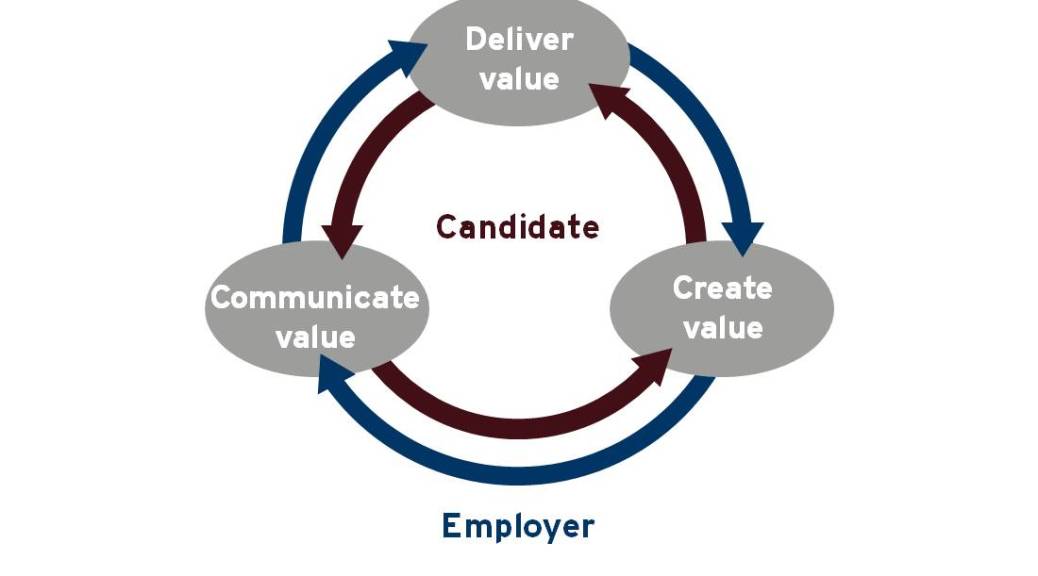
Most explanations of the marketing exchange process only explain a simple, single transaction: I give you currency in exchange for a product or service I value. The Marketing Exchange Circle, whilst still simple, explains the whole value creation process and is particularly relevant for people developing an employment value proposition (EVP) or employer brand. It was introduced to me a long time ago by one of my Marketing lecturers – Don Bathie (its creator).

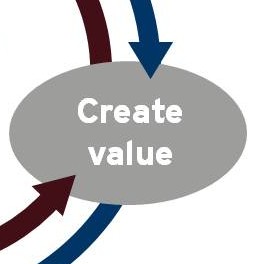
First of all, the employer has to create something of value – the proposition. The offer to the talent marketplace to come and work here.

Marketing Exchange Circle

In my experience, the most critical element of this is making it different and distinctive from your competitors (the competition for talent, not necessarily the competitors for your consumers).

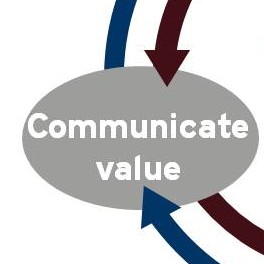
Marketing Exchange Circle

Then you have to communicate this value to the marketplace. You decide on the messages, the media, etc to convey the value you offer to the people you most want to attract, in the most compelling way. This is the promise you are making to potential employees.

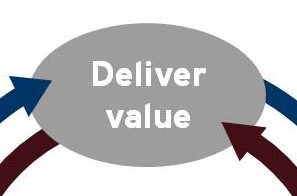
Then, crucially, you have to deliver value. You have to keep your promise. And this includes everything from the onboarding experience you provide, the work environment and how the person’s line manager behaves, to the sort of work the person will be doing and how they will be rewarded, developed and recognised.

You will also have noticed that there’s a cycle going in the other direction. This represents the candidate and the exchange that takes place at each point in the circle.

Marketing Exchange Circle

Firstly, the candidate has to create something of value for the employer. This is the ‘talent’ they offer – the skills and experience they have accumulated that make them attractive to the organisation.

Then they have to deliver themselves to a touch point with the organisation. This could be finding a careers site, having a conversation with an existing employee that could refer them or crafting a LinkedIn profile that you notice.

The candidate and organisation then exchange information. The organisation gets valuable feedback on whether what it is communicating is successfully explaining the value on offer. Is the right talent engaging and responding? If not, the organisation needs to refine its recruitment marketing.

If it is, the candidate is likely to be attracted to the organisation and vice versa. During the selection process a further exchange of information lets each party assess the value on offer.

If the candidate then joins the organisation another exchange occurs as the candidate – now an employee – can feedback to the organisation whether the value proposition it created is sufficient to retain and engage that person. It will be obvious if it’s not through either a drop off in performance against expectations or attrition.

And so the cycle continues around the circle again – with the organisation using that feedback to refine and enhance its value proposition to take to market again; and the employee using the value he/she has derived to make himself/herself even more attractive and valuable to retain and/or promote. Otherwise the employee will leave and use their own enhanced value proposition to engage with another employer.

The Marketing Exchange Circle is a simple but very practical tool you can use to assess the strength of your EVP and brand:

  • Attrition data and exit interviews will tell you how you need to improve your value proposition
  • Attraction metrics will tell you if you’re communicating this effectively, and
  • Your offer acceptance rate and engagement scores will tell you if you’re delivering sufficient value

Any weak link in the circle will cause it to collapse.

I have found the Marketing Exchange Circle to be really useful in explaining the value creation process to people and helping them understand how what they do has an impact on what you are trying to achieve – whether that’s designing a proposition, communicating it or getting other parts of the organisation to deliver on the promise.