Category Archives: Job Search Resources

The SlideShare presentation that got me hired

slide-1-728

I received this in a SlideShare newsletter last week. It’s a great example of a creative campaign to get hired (for a job that wasn’t being advertised – it was being tweeted).

Yes, it’s American; yes, she works in PR; and, yes, this won’t apply to everyone for every role. But there are some very important lessons to be learned from Laura’s story:

  • The impact of technology on the job search is unrelenting and you need to a) keep up, and, b) start using it to your advantage
  • Thinking creatively about how to market yourself usually creates a very good impression with a prospective employer
  • You create your own opportunities to stand out from the crowd

So read Laura’s story and think about how you could market yourself more creatively…

Resumes are Old School, Use SlideShare & Twitter to Get Hired

Laura Gainor wasn’t always the PR & Social Media Strategist at Comet Branding and this is the story of how that came to be.

When Laura found out she and her husband were moving from Charlotte to Milwaukee, she reached out to companies in the area, including Comet Branding who tweeted about a job opening.

Laura set out to get herself hired by launching a #LauraGainorToMilwaukee campaign that mixed in Twitter, FourSquare and SlideShare.
Laura and her husband had already planned a trip to Milwaukee. She made a poster out of the Comet Brand logo and posted pictures of the poster in various venues at Milwaukee with a Foursquare check-in and a tweet. The campaign was fun, spontaneous and creative and showcased Laura’s personality and creativity.

But Laura also wanted to showcase her experience as well as creative and strategic talents. So she uploaded a presentation to SlideShare and periodically tweeted links to that presentation.

“SlideShare allowed me the opportunity to publicly explain what I did and how I did it, to get the attention of Comet Branding,” said Laura.

Laura pulled together photos to create a virtual resume as well as screenshots of her Foursquare check-ins from Milwaukee. “My goal for my SlideShare presentation was to create a story about who I was, my professional experience, showcase my talents that would make me a good fit for Comet Branding, as well as pull together my #LauraGainorToMilwaukee story into one place,” Laura explained.
The very day Laura’s presentation was uploaded, it made it to SlideShare’s ‘Most Popular’ and was passed around on SlideShare and the Twittersphere. She got tweets and direct messages from all over.
There were even teachers downloading the presentation to show their classes and example of presenting yourself as a brand to possible employers.

Comet Branding also noticed Laura. They contacted her to setup a first interview. On March 1st she went in for a second interview and was immediately offered the position!

Laura says, “I feel very honored to have had my first day in my new desk at Comet Branding on Wednesday, March 3rd.”

If you are looking for a job, take a lesson from Laura’s book – showcase yourself through a presentation and use Twitter or Facebook to get the attention of the company you want to work at.
What is your online presence telling employers?

In a recent survey of over 1,000 HR professionals, 64 per cent of them said they considered it appropriate to search the web for information on a job candidate – and 41 per cent of them had rejected a candidate on this basis!

In a parallel survey of jobseekers, only 37 per cent of them thought it was their responsibility to protect their online reputation.

This issue is mentioned in a previous post about personal branding. I suspect Googling candidates will become even more commonplace – especially for senior or public roles.

John Lees makes the same point in an article in the last issue of People Management: “think carefully about entries on social networking sites”. Talking about being memorable, he also makes the comment that “It’s vital you manage the things people say about you when you’re not in the room.” If someone’s found an embarrassing picture of you on Facebook, what’s that going to do to your chances of getting that job or promotion?

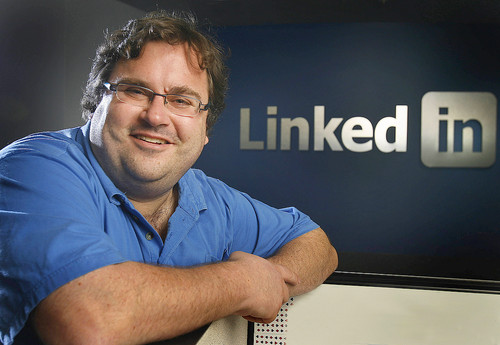
Lessons from LinkedIn’s founder

I read an interview with Reid Hoffman, the founder of LinkedIn, last night. Successful internet entrepreneurs seem to have that proverbial ‘overnight success’; but, like anyone else, his career has been an interesting journey.

He graduated with a Master’s degree in philosophy from Oxford and initially saw his career path as academia, “But I realised academics write books that 50 or 60 people read and I wanted more impact.”  He decided that an entrepreneurial career would provide him with a bigger platform.

He returned to California in 1993, just at the start of the internet boom, and began to pursue a career in software. However, he had come up with a checklist of skills he wanted to acquire. He purposely set out to acquire them and, within four years, which included stints at Apple and Fujitsu to develop the skills he sought, he launched his first internet venture – a dating website called SocialNet.com

Whilst there were other online dating services, this was way before the terms Web 2.0 and social networking had been coined. You can see where Hoffman was going….

SocialNet.com wasn’t a great success. Hoffman realised that his early adopters were only customers for about three and a half months – either they found someone in that time or they got frustrated and moved on to try something else.

He realised that, “The ideal characteristic of a startup is where people don’t fully understand if your idea is any good or not but where you prove it is in two or three years.” (That certainly describes my experience with LinkedIn – I signed up in 2006 because it looked interesting, but it took a couple of years to realise its full power and its benefits).

In 1999, Hoffman moved to PayPal, becoming part of the founding board and then a full-time employee as VP of Business Development. He played a key role in the sale of Paypal to eBay in 2002.

From there the rest is history. He took what he learned from SocialNet and founded LinkedIn. It’s now pushing 50 million members worldwide and Hoffman’s goal is to sign up “25 per cent of the globe” (that’s his estimate of how many people could be described as ‘professional’).

He also likes to point out that “Every individual now is a small business. You no longer work for one entity for a lifetime. Part of the mistake is that you think you have to go and search and find a job. But there is a massive ecosystem of people out there who might come and find you.” And LinkedIn has certainly facilitated that!

Career management lessons:

  • Figure out where you can make the most impact with what you do.
  • Come up with a ‘checklist of skills’ to be the best in that field. Audit yourself – do you have all those skills or do you need to acquire them?
  • Test your ideas and, if something doesn’t work, don’t consider it a failure; learn from it.
  • (At this point it helps if you can make a huge pile of money from an IPO, but that’s not essential.)
  • Apply what you have learned.
  • Develop and maintain your professional brand (including LinkedIn profile!)

I leave the final comment to a quote from Hoffman: “Life is not like a chess plan. It’s more about what opportunities you find yourself facing and how you respond to them.”

Interview workouts

If you’re preparing for interviews, have a look at these two nifty sites:

Be My Interviewer lets you select an interviewer from a panel including Duncan Bannatyne and Ruth Badger through to the HR Director at Virgin Media or Director of Business Advisory Services at Ernst & Young. A streaming video then plays interview questions they typically ask, which you can pause to answer. One of the most useful features is that each interviewer then offers some guidance on what he or she looks for in a model answer to that question – and why they ask it.

Very handy for getting some insights into the questions they choose – most are even assessing your responses to the pleasantries.

At whatwilltheyask.co.uk  a group of graduates at Bristol University got together to create a site where interviewees can post the actual questions they were asked at interview. Initially, the focus was on graduate jobs, but this has grown to include many questions from real interviews for a variety of posts at the big corporates, charities and public sector bodies.

So if you have an interview coming up, look at the site to see if any other applicants have been through the selection process at that company for similar roles before – it will help you prepare more thoroughly and tip you off about anything particularly tricky to watch out for.

CV scams

The Guardian and other sources have reported evidence of scammers preying on beleaguered job hunters by posing as recruiters and offering CV re-writes for a fee.

Fake job ads are netting CVs and the candidate then gets a call saying they are an “ideal fit” for the job but the CV needs to be tidied up before it can get sent on to the company. There is also usually a promise that the upgraded CV will result in an interview. The recruiter then recommends someone to revise the CV for fees ranging from £99 to around £350.

Of course the job doesn’t exist and, whilst CVs do appear to be getting a makeover, there is no interview – candidates are told the post was filled internally or withdrawn at the last minute. After a month or so, the web site comes down and a new one goes up in its place for the whole sham to start all over again.

Good recuitment consultants will help you refine and develop your CV, or make suggestions as to how it can be improved, but be highly suspicious of anyone who wants to take money off you – especially if it’s mid-process and they’re tempting you with the possibility of an interview to follow.

There are many good specialist CV services out there, some from a recruitment background, some are professional writers. If you’re going to use one (and I’d argue that the best person to write your CV is you), look for one that’s completely independent of any recruitment organisation – and do your own research. A personal recommendation is always far better than a Google search.

One of the most widely reported scams is a website called employeruk.com  It looks very plausible, but DON’T SUBMIT ANY DETAILS, IT’S A FAKE!

There are also reports of the mainstream job sites like Monster and totaljobs.com being hit by scammers registering as recruiters and skimming personal details off CVs for identity theft crimes. The Guardian article reports of a controlled experiment to see how much personal information gullible job searchers would offer up. It’s estimated that criminals need just three out of 15 key pieces of information to commit identity fraud – the average CV received as part of the experiment contained eight items.

Some tips to avoid the scams:

  • If it looks too good to be true, it probably is
  • Avoid any recruitment sites with just 0845, 0844 or mobile numbers – they could be anywhere. Avoid recruiters with webmail addresses like Yahoo! and hotmail. Look for a bricks and mortar address and research the company if you’ve not heard of it before
  • Be very suspicious of any recruitment consultant asking you for money – in a bone fide agency it’s the employer who pays their fee
  • On your CV, do not include your date of birth, place of birth, middle names or marital status – it’s irrelevant for a job application and grist to the mill for identity fraudsters
  • Be wary of including your full postal address in CVs being uploaded into job portals, your general location such as a town or city should suffice.

It’s appalling that people are exploiting job searchers for money, and also sometimes committing identity fraud with unsuspecting job applicants. Don’t get caught out.

Get paid by a recruiter!

I have just been reading about an Edinburgh company doing something very interesting in the recruitment market: Playfair & Noble.

They have essentially cut out the middle man. As an employer, you can post jobs and view candidates – nothing new there. And as a candidate you can register and browse for jobs, again, no great shakes. Until you discover that the fee P&N charge the employer for hiring someone is only 7% – compared to an industry average of 25% – and P&N then give half of that fee to the candidate!

So if you land a £40,000 job through them, they pay you £1,400. Nice one.

They launched in the summer and appear to have got off to a really good start. I don’t know of anyone who has used them yet, but they have some reputable clients in the legal sector that I know, such as Burness, Shepherd & Wedderburn and Semple Fraser. Ian Anderson, HR Director at Semple Fraser, said in an IOD article about P&N, “Our early experience of working with them has been positive and gives us confidence that their approach does what it says on the tin.”

They are currently focused on the following areas, but saying that they are likely to expand this:

  • Accountancy & Finance
  • Architecture / Design
  • Engineering
  • Executives
  • Information Technology
  • Law
  • Project Management
  • Quantity Surveying / Cost Management
  • Sales & Marketing
  • Secretarial
  • Check it out. Anyone out there had any experience with them – as employer or candidate?