Category Archives: Personal branding

The SlideShare presentation that got me hired

slide-1-728

I received this in a SlideShare newsletter last week. It’s a great example of a creative campaign to get hired (for a job that wasn’t being advertised – it was being tweeted).

Yes, it’s American; yes, she works in PR; and, yes, this won’t apply to everyone for every role. But there are some very important lessons to be learned from Laura’s story:

  • The impact of technology on the job search is unrelenting and you need to a) keep up, and, b) start using it to your advantage
  • Thinking creatively about how to market yourself usually creates a very good impression with a prospective employer
  • You create your own opportunities to stand out from the crowd

So read Laura’s story and think about how you could market yourself more creatively…

Resumes are Old School, Use SlideShare & Twitter to Get Hired

Laura Gainor wasn’t always the PR & Social Media Strategist at Comet Branding and this is the story of how that came to be.

When Laura found out she and her husband were moving from Charlotte to Milwaukee, she reached out to companies in the area, including Comet Branding who tweeted about a job opening.

Laura set out to get herself hired by launching a #LauraGainorToMilwaukee campaign that mixed in Twitter, FourSquare and SlideShare.
Laura and her husband had already planned a trip to Milwaukee. She made a poster out of the Comet Brand logo and posted pictures of the poster in various venues at Milwaukee with a Foursquare check-in and a tweet. The campaign was fun, spontaneous and creative and showcased Laura’s personality and creativity.

But Laura also wanted to showcase her experience as well as creative and strategic talents. So she uploaded a presentation to SlideShare and periodically tweeted links to that presentation.

“SlideShare allowed me the opportunity to publicly explain what I did and how I did it, to get the attention of Comet Branding,” said Laura.

Laura pulled together photos to create a virtual resume as well as screenshots of her Foursquare check-ins from Milwaukee. “My goal for my SlideShare presentation was to create a story about who I was, my professional experience, showcase my talents that would make me a good fit for Comet Branding, as well as pull together my #LauraGainorToMilwaukee story into one place,” Laura explained.
The very day Laura’s presentation was uploaded, it made it to SlideShare’s ‘Most Popular’ and was passed around on SlideShare and the Twittersphere. She got tweets and direct messages from all over.
There were even teachers downloading the presentation to show their classes and example of presenting yourself as a brand to possible employers.

Comet Branding also noticed Laura. They contacted her to setup a first interview. On March 1st she went in for a second interview and was immediately offered the position!

Laura says, “I feel very honored to have had my first day in my new desk at Comet Branding on Wednesday, March 3rd.”

If you are looking for a job, take a lesson from Laura’s book – showcase yourself through a presentation and use Twitter or Facebook to get the attention of the company you want to work at.

What is your online presence telling employers?

In a recent survey of over 1,000 HR professionals, 64 per cent of them said they considered it appropriate to search the web for information on a job candidate – and 41 per cent of them had rejected a candidate on this basis!

In a parallel survey of jobseekers, only 37 per cent of them thought it was their responsibility to protect their online reputation.

This issue is mentioned in a previous post about personal branding. I suspect Googling candidates will become even more commonplace – especially for senior or public roles.

John Lees makes the same point in an article in the last issue of People Management: “think carefully about entries on social networking sites”. Talking about being memorable, he also makes the comment that “It’s vital you manage the things people say about you when you’re not in the room.” If someone’s found an embarrassing picture of you on Facebook, what’s that going to do to your chances of getting that job or promotion?

Lessons from LinkedIn’s founder

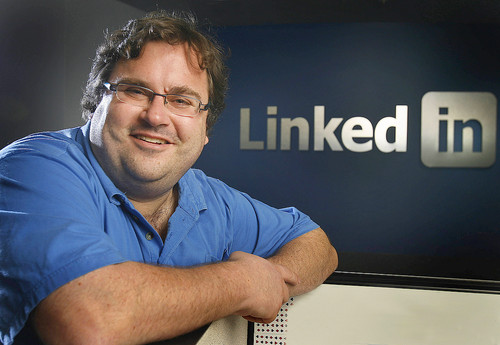
I read an interview with Reid Hoffman, the founder of LinkedIn, last night. Successful internet entrepreneurs seem to have that proverbial ‘overnight success’; but, like anyone else, his career has been an interesting journey.

He graduated with a Master’s degree in philosophy from Oxford and initially saw his career path as academia, “But I realised academics write books that 50 or 60 people read and I wanted more impact.”  He decided that an entrepreneurial career would provide him with a bigger platform.

He returned to California in 1993, just at the start of the internet boom, and began to pursue a career in software. However, he had come up with a checklist of skills he wanted to acquire. He purposely set out to acquire them and, within four years, which included stints at Apple and Fujitsu to develop the skills he sought, he launched his first internet venture – a dating website called SocialNet.com

Whilst there were other online dating services, this was way before the terms Web 2.0 and social networking had been coined. You can see where Hoffman was going….

SocialNet.com wasn’t a great success. Hoffman realised that his early adopters were only customers for about three and a half months – either they found someone in that time or they got frustrated and moved on to try something else.

He realised that, “The ideal characteristic of a startup is where people don’t fully understand if your idea is any good or not but where you prove it is in two or three years.” (That certainly describes my experience with LinkedIn – I signed up in 2006 because it looked interesting, but it took a couple of years to realise its full power and its benefits).

In 1999, Hoffman moved to PayPal, becoming part of the founding board and then a full-time employee as VP of Business Development. He played a key role in the sale of Paypal to eBay in 2002.

From there the rest is history. He took what he learned from SocialNet and founded LinkedIn. It’s now pushing 50 million members worldwide and Hoffman’s goal is to sign up “25 per cent of the globe” (that’s his estimate of how many people could be described as ‘professional’).

He also likes to point out that “Every individual now is a small business. You no longer work for one entity for a lifetime. Part of the mistake is that you think you have to go and search and find a job. But there is a massive ecosystem of people out there who might come and find you.” And LinkedIn has certainly facilitated that!

Career management lessons:

  • Figure out where you can make the most impact with what you do.
  • Come up with a ‘checklist of skills’ to be the best in that field. Audit yourself – do you have all those skills or do you need to acquire them?
  • Test your ideas and, if something doesn’t work, don’t consider it a failure; learn from it.
  • (At this point it helps if you can make a huge pile of money from an IPO, but that’s not essential.)
  • Apply what you have learned.
  • Develop and maintain your professional brand (including LinkedIn profile!)

I leave the final comment to a quote from Hoffman: “Life is not like a chess plan. It’s more about what opportunities you find yourself facing and how you respond to them.”

Cultivating your personal brand

I was at a dinner last night that Simon Francis, CEO for EMEA at Saatchi & Saatchi, spoke at. His topic was branding and, specifically, the concept of lovemarks that Saatchi & Saatchi has developed (brands that have “love” as well as respect and “inspire loyalty beyond reason”).

Saatchi’s approach to building a lovemark is to engage people emotionally; rather than rationally, and create good feelings about a brand. He gave a lot of examples such as Apple doing this with the iPod compared to Sony’s Walkman (“Apple just get how people can feel moved by music”), etc.

I asked a question about Simon’s take on the idea of personal branding and here is his response:

Simon was aware of various moves people are making to cultivate a personal brand (and mentioned some topical examples such as Tiger Woods!) and how it can all go horribly wrong if you’re exposed as something different to the brand you portray.

He made the point that the technology and social media we all have at our disposal is so powerful, it would be pointless trying to position yourself as something that a quick Google search will reveal as untrue.

So it came down to integrity – and that presenting yourself honestly as who you really are is the only way to go. Sound advice.

Essentially, Simon saw people’s efforts at personal branding to be no different to conventional means of self-marketing, such as a good CV, being appropriately dressed for the roles you aspire to, etc. – just that people were using new tools to do this and it has been given a new name.

In an earlier part of his presentation about how his teams put together the makings of a lovemark, Simon talked about starting with “a new idea” for the brand – an organising thought around which the whole campaign rotates. The example he featured was Saatchi’s work for T-Mobile and the ‘Life is for sharing’ idea that started with the ‘impromptu’ dance at Liverpool Street station.

T-Mobile Liverpool Street dance

This is a useful concept for personal branding too – what’s your ‘organising thought’? The one big idea about YOU that stands out.

He concluded by talking about how they get ideas for this ‘new idea’ – they ask questions of consumers and listen really carefully for emotions – ‘How do you feel about this brand?’, ‘What would it take for you to really love this kind of product?’ The same approach can apply with creating your personal brand – ask colleagues, former bosses, references, etc about how they feel about working with you – what do they love about working with you?

Then use these emotions when crafting a brand for yourself.