Firms fail to meet employees’ career aspirations

Today the Chartered Institute of Management published its survey results, which show some interesting things career wise:

Resignations have increased over the last year – and these aren’t redundancies – these are people leaving voluntarily. Requests for internal transfers are also down. So, despite the volatility in the jobs market, more people are choosing to pursue career opportunities elsewhere.

More than half the employers questioned (53.8 per cent) admitted that restructuring and job insecurity caused many of their staff to ‘jump ship’.  A significant proportion (38.5 per cent) recognised that their ‘failure to offer career opportunities and training’ contributed to employees leaving.  Given widespread recognition that engaged staff are more loyal, it is alarming that 61.5 per cent also admitted that their employees’ heads had been turned by head-hunters and recruitment consultants.

My sesnse of one of the best things to come out of this recession is a new intelligence about careers. I congratulate the people who’ve had the courage to move on to something better (sacrificing significant employment rights if they had more than a year’s service with the former employer), and I am disappointed that employers still don’t place enough emphasis on career management.

Too often, when someone hands in their notice, the manager says something like ‘I wish I’d known, I had big plans for you’. WHY DIDN’T YOU TELL THEM THEN?!

If you are considering a move, why don’t you take the initiative and ask for a chat with your manager about your career goals? You don’t have to be totally upfront with them about your desire to move on. Something like ‘I’ve been thinking about how I could add more value, and these are the things I’d like to focus on over the next year or so…’ will test the water. See if your manager responds with an open and authentic discussion about your career with the organisation.

In most cases, he/she won’t want to lose you and, assuming there’s a good cultural fit between you and the organisation, there are several advantages to staying with the same employer and shaping your job to play to your strengths more (longer holiday entitlement, established relationships, better visibility of new career opportunities, etc – and, if the worst does happen, your long service will entitle you to a bigger redundancy package).

So if your employer has been a bit remiss about helping you to manage your career, why don’t you get the ball rolling…..what have you got to lose? Looks like there’s still healthy demand for good people out there.

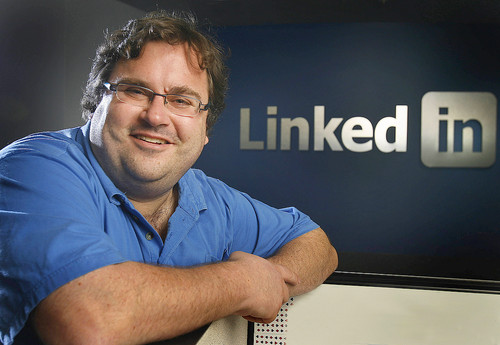
Lessons from LinkedIn’s founder

I read an interview with Reid Hoffman, the founder of LinkedIn, last night. Successful internet entrepreneurs seem to have that proverbial ‘overnight success’; but, like anyone else, his career has been an interesting journey.

He graduated with a Master’s degree in philosophy from Oxford and initially saw his career path as academia, “But I realised academics write books that 50 or 60 people read and I wanted more impact.”  He decided that an entrepreneurial career would provide him with a bigger platform.

He returned to California in 1993, just at the start of the internet boom, and began to pursue a career in software. However, he had come up with a checklist of skills he wanted to acquire. He purposely set out to acquire them and, within four years, which included stints at Apple and Fujitsu to develop the skills he sought, he launched his first internet venture – a dating website called SocialNet.com

Whilst there were other online dating services, this was way before the terms Web 2.0 and social networking had been coined. You can see where Hoffman was going….

SocialNet.com wasn’t a great success. Hoffman realised that his early adopters were only customers for about three and a half months – either they found someone in that time or they got frustrated and moved on to try something else.

He realised that, “The ideal characteristic of a startup is where people don’t fully understand if your idea is any good or not but where you prove it is in two or three years.” (That certainly describes my experience with LinkedIn – I signed up in 2006 because it looked interesting, but it took a couple of years to realise its full power and its benefits).

In 1999, Hoffman moved to PayPal, becoming part of the founding board and then a full-time employee as VP of Business Development. He played a key role in the sale of Paypal to eBay in 2002.

From there the rest is history. He took what he learned from SocialNet and founded LinkedIn. It’s now pushing 50 million members worldwide and Hoffman’s goal is to sign up “25 per cent of the globe” (that’s his estimate of how many people could be described as ‘professional’).

He also likes to point out that “Every individual now is a small business. You no longer work for one entity for a lifetime. Part of the mistake is that you think you have to go and search and find a job. But there is a massive ecosystem of people out there who might come and find you.” And LinkedIn has certainly facilitated that!

Career management lessons:

  • Figure out where you can make the most impact with what you do.
  • Come up with a ‘checklist of skills’ to be the best in that field. Audit yourself – do you have all those skills or do you need to acquire them?
  • Test your ideas and, if something doesn’t work, don’t consider it a failure; learn from it.
  • (At this point it helps if you can make a huge pile of money from an IPO, but that’s not essential.)
  • Apply what you have learned.
  • Develop and maintain your professional brand (including LinkedIn profile!)

I leave the final comment to a quote from Hoffman: “Life is not like a chess plan. It’s more about what opportunities you find yourself facing and how you respond to them.”

Ten careers that didn’t exist ten years ago

This article at Carerbuilder.com isn’t a scietific survey, but it does make you think about how technology, social and environmental trends are shaping careers.

It contains an interesting example of a career shifter: the customer service rep who became a full-time blogger and more than doubled his salary!

And ten years ago, who’d have thought you could get a job as a Green Funeral Director or a Social Media Strategist?

Dom Sagolla, co-creator of Twitter, is also quoted as saying his success is down to his efforts to position himself at the intersection of two emerging new industries – iPhone apps and social media.

Nice work if you can get it! Rather than trying to predict the next big thing to get into, look for the convergence of two industries – the intersection is going to create a real hot spot and demand for people who can capitalise on it.

Where did all the talent go?

Here’s an article I wrote for the January issue of HR Network Scotland (you can read the full magazine by clicking on the cover on the homepage).

It’s from the perspective of the employer, encouraging managers to be more proactive in having career development discussions with employees, but is also relevant to employees in terms of recommending they take the initiative and express their career aspirations to the boss.

If you’re suffering from New Year blues at present and are frustrated in your current role, why not follow the suggestions in this article? The solution to your job dis-satisfaction may be closer to home than you think:

“How many of your employees do you think have made New Year’s Resolutions to find another job?

Perhaps not right now, but if an upturn comes in your market over the course of this year a lot of them might be off. Exit interviews show that over 25% of leavers were moving for career advancement that their former employer could have offered them – if a conversation about career development had taken place sooner.

Do you talk to your employees about their future? Talented people want challenging assignments and good leadership. So successful career planning requires employer and employee to have mature conversations about ambitions, aspirations, potential, opportunities and growth.

So why don’t we discuss these issues? Why is HR so unsuccessful in running internal mobility initiatives? Underpinning this failure of communication is a lack of openness and clarity on both sides.

Employees are reluctant to voice their aspirations and long-term career goals for fear of jeopardising their job security. They don’t want their employer to think they are dissatisfied, disloyal or planning to leave. So they don’t ask for training or secondments that will allow them to develop the competencies they need to build on as part of their long-term career plan. Instead they leave for a role that they hope will allow them to develop these aspirational competencies.

It’s relatively rare for people to leave jobs where they are happy, even if offered higher pay, as most people prefer stability. But CIPD research shows lack of training and developmental opportunities are major reasons for staff turnover. If more organisations could get this bit right they’d improve their staff retention, make significant savings on recruitment costs and improve staff relations too.

Employers fear making the investment in training and developing people who will then leave. In addition, managers don’t necessarily advertise the fact that staff are top performers, as they don’t want to lose their best people to promotion or other departments. This means good staff aren’t enabled to fulfil their potential and may move on prematurely because managers aren’t committed to and engaged in the career planning and development process.

In an organisation that aims to anticipate human capital needs and meet them effectively, management needs to encourage dialogue about career paths, choices and opportunities. This sort of interaction can produce a win/win situation: employees improve their skills and competencies while the organisation benefits from an engaged and empowered workforce, enabled to realise their potential as well as their ambitions.

Ambitious people don’t want to wait for opportunities and often don’t have to – they move on. Good employees are looking for work that interests them and to increase their skills base. They want advancement, challenges and control over their careers. So processes and policies that go even part way to helping staff achieve their aspirations and ambitions will pay dividends. Building a talent pool is more efficient, less disruptive and cheaper than buying talent in!

Initiating such conversations may feel risky. Managers may feel that career decisions are best left to HR and top management. But balancing the interests of employer and employee is a strategic imperative if you want to protect your investment in development efforts. Employees need to willingly share their view of the future with their employers – and if career planning with their current employer can help them grow into what they want to be then that’s all to the good for both parties.

Management need to be educated in dealing with these risky conversations. They need to initiate dialogues with employees to address development needs and concerns. This has to be face-to-face. It may be sensitive, challenging and time-consuming. It requires imagination, courage and commitment on the part of the organisation. But the alternative is even more costly – losing your best people.

Openness in discussing career planning allows an organisation to improve its capability to spot talent, keep people motivated, stretched and challenged, whilst giving them appropriate support and development opportunities. Employees’ choices may not dovetail with organisational interests perfectly, but preserving the investment made in developing staff is a moveable feast. Meeting the needs of the organisation should take account of the preferences of all involved.

We all know that very few New Year’s Resolutions get acted upon – so why not demonstrate to your best employees that there really is no need to start surfing round the job boards? Start talking to them about their careers today.”

Interview workouts

If you’re preparing for interviews, have a look at these two nifty sites:

Be My Interviewer lets you select an interviewer from a panel including Duncan Bannatyne and Ruth Badger through to the HR Director at Virgin Media or Director of Business Advisory Services at Ernst & Young. A streaming video then plays interview questions they typically ask, which you can pause to answer. One of the most useful features is that each interviewer then offers some guidance on what he or she looks for in a model answer to that question – and why they ask it.

Very handy for getting some insights into the questions they choose – most are even assessing your responses to the pleasantries.

At whatwilltheyask.co.uk  a group of graduates at Bristol University got together to create a site where interviewees can post the actual questions they were asked at interview. Initially, the focus was on graduate jobs, but this has grown to include many questions from real interviews for a variety of posts at the big corporates, charities and public sector bodies.

So if you have an interview coming up, look at the site to see if any other applicants have been through the selection process at that company for similar roles before – it will help you prepare more thoroughly and tip you off about anything particularly tricky to watch out for.

Who’s managing your career?

Happy New Year!

If you’re thinking about career goals for the year ahead, below is an article I wrote for the January edition of Edinburgh Chamber of Commerce’s ‘Business Comment’ magazine:

Most people spend more time planning a holiday than planning their career. If something goes wrong with your holiday you’ve usually got insurance to fall back on. If something goes wrong with your career, what’s your plan?

The new year is traditionally a time to set goals – why not put some effort into your career goals for the year ahead? If you’re at risk of redundancy, or affected by a merger, acquisition, or restructuring, you need a plan. If you’re an employer, or a manager responsible for the careers of others, you have a role to play in managing their careers too.

Despite everything that’s happening in the economy at present, the fundamentals of career management haven’t really changed in the last hundred years. As early as 1909, Frank Parsons, an American social reformer was counselling people on three things: know yourself; know the market for your skills and abilities; and know how to successfully marry the two.

Here are some tips on how to cover those three aspects of essential career management:

  1. Understand what you’re really good at and what you enjoy at work. What conditions need to be in place for you to perform at your best? What kind of people and environments help you achieve peak performance? If you’re stuck for answers, consider asking trusted colleagues and friends what they observe in you when you’re performing at your best.
  2. Explore the market for what you have to offer. Use your network, colleagues, friends and family, or tools like LinkedIn.com to research the kind of work people with your abilities are doing. Find out what’s happening in other sectors, even in other geographies, and determine where your skill set is in demand. Don’t be put off by negative reports about the economy – there is always demand for good people, you just need to know where to look.
  3. In terms of landing that dream job, within your current organisation or elsewhere, recent research amongst job seekers has shown that more proactive people find a new role almost twice as quickly as those who just browse for jobs. They are clear on what they want and focused on where and how they can add value, and they employ five or more routes into the job market – don’t just rely on job boards and newspaper ads. Use networking, trade publications, agencies, speculative applications, etc.


 And if you’re an employer, discuss all of the above with your staff. Exit interviews show that, when people leave an organisation for career advancement, their previous employer could have held onto them if their manager had been more proactive with career development discussions. There will be some people you want to keep and some whose career progression lies outside your organisation. Proactively managing their careers can have a huge ROI for you in terms of increased productivity, improved retention and more engagement.

New year career resolutions? Which world of work will you be in?

What do you think the future of work will look like over the next decade?

As 2009 closes, many of us will be considering new career objectives for the year ahead. But why not think longer term – where do you think you’ll be in 2020? As part of their ‘Managing Tomorrow’s People’ research series, PwC have put together a little quiz to help you forecast which world of work you’re headed for in 2020 – blue (corporate), green (sustainability and social values) or orange (small, collaborative networks). I was orange.

They also published a press release yesterday showing the effect of showing a little appreciation on employee loyalty:

One in three (33%) UK employees say they have not felt valued by their employer during the recession and would leave for another job if they could. Of those respondents who said their employer had shown appreciation for them in the downturn, 41% said they had no plans to leave as a consequence of this loyalty and just 23% said they would consider leaving regardless.

Either way, that means one in three or almost one in four people in every workplace is considering a career move – so now’s the time to do some prep and get ahead of the competition. Max Messmer, author of Managing Your Career For Dummies, offers ten New Year’s resolutions for your career here.

Whatever your career plans for 2010, I wish you all the best!

When getting fired turns out to be a good thing

I have two small children so I have seen all the Pixar movies. I watched ‘The Pixar Story’ over Christmas out of a curiosity for how they make the films, and also learned something interesting about the career of John Lasseter, one of the co-founders.

John loved cartoons as a child, went on to study animation and even got a job as a sweeper at Disneyland. After winning awards for two short films he made at the California Institute of Arts, he got his dream job as an animator at Disney in April 1980.

The studio arranged a screening of Tron for employees and John was amazed by the potential for computer animation – especially being able to move the background by computer whilst animating characters by hand. The studio gave John his feature length directorial debut on a film called ‘The Brave Little Toaster’ using computer animation.

At the screening of the final cut, Disney’s CEO, who had remained stony-faced throughout, asked what a feature made entirely on computers would cost, to which John replied it would be about the same as a regular animated film. The CEO said the only reason to use computers would be if it made production faster or cheaper, and then walked out.

Five minutes later, John was summoned to his office where the CEO said to him, “Your project is now complete, so your employment at Disney is terminated.”

He was stunned and devastated. Colleagues admitted Disney just didn’t know what to do with him.

He was subsequently hired by Lucasfilm’s Computer Division, where the team of computer scientists went on to develop an imaging computer they named Pixar. Inspired by John’s vision of a computer animated feature, they went to George Lucas to pitch the idea, but he didn’t want to make the $30-$40m investment required.

Coincidentally, Steve Jobs at Apple had become aware of their work, and he suddenly found himself out of a job when the executives he’d hired to take Apple to the next level fired him. Steve Jobs then invested $10m in Pixar as it was spun out from Lucasfilm.

They did some interesting work to pay the bills, but were nowhere near raising the funds required for a feature film budget. Then the money started running out. Jobs was losing about $1m a year keeping Pixar running. Disney, having subsequently developed some painting and texturing software, tried to hire Lasseter back as a Director to help them make sense of this new medium. A Pixar colleague described John’s choice, “Does he go back to Disney as Director, or stay at his own company bordering on collapse?”

John decided to stay. Note to employers: treat your employees well when you are exiting them, because you never know when you’ll need to hire them back.

Instead, Disney commissioned Pixar to produce Toy Story, striking a deal with them so that Disney would provide distribution and marketing.

Toy Story


This arrangement served both companies well, and was extended to a 50/50 deal with Disney in 1995 when Pixar floated, but then relationships soured.

It was only when a new CEO came on board at Disney in 2005 that he saw the future of animated features lay in CGI and all the best people to do it were at Pixar.

In 2006, Disney paid $7.6bn to acquire Pixar and as part of the deal John Lasseter became Chief Creative Officer, overseeing all of Disney’s output, theme parks and attractions.

Career Management lessons:

When you’re career seemingly takes a turn for the worse, the ultimate outcome may be far better than you ever expected, but you just don’t know it yet. This is expressed by Steve Jobs, coincidentally, in his 2005 Stanford Commencement Speech , where he talks about “joining the dots backwards” (using his experience of getting fired from Apple and going on to become involved in Pixar as one example).

If you love what you do you will be able to find a path to pursue that love no matter what. John Lasseter’s ability to inspire the Lucasfilm team with his enthusiasm for an animated feature was instrumental in achieving that goal.

Don’t be surprised if a former employer seeks you out and attempts to woo you back. Evidence suggests that around 25% of people return to a former employer at some stage in their career. Just consider how that employer handled your departure and whether your values match with those they demonstrated when you left – if there’s a mismatch, going back might not be a good idea – even if it looks like an easy option.

Very few of us are going to start companies that we can sell for billions of dollars (or pounds) – but discovering what ‘your thing’ is and making it your life’s work is going to make your career extremely rewarding nonetheless.

Why Scottish workers avoid the worst of the recession

The latest unemployment figures published a couple of days ago showed unemployment had fallen in Scotland, whilst it has continued to rise across the rest of the UK:

  • The Scottish unemployment rate declined to 6.9 per cent, with 2,000 fewer people in Scotland unemployed. At the UK level, unemployment increased by 21,000 and the UK unemployment rate was 7.9 per cent over the same period
  • Scotland’s employment rate increased by 0.5 percentage points to 74.2 per cent, with 15,000 more people in work, while the UK employment rate remained unchanged at 72.5 per cent

However, on the traditional measure – the monthly tally of people claiming Jobseeker’s Allowance – unemployment rose by 1,300 to 136,000. The only explanation I’ve heard for how one measure can go up whilst the other one goes down is that the time periods over which they report are different – with the Jobseeker’s Allowance claimants figures taking November into account.

The Scottish Government, of course, chooses to highlight the positive news and portrays it as the result of all of its hard work through PACE and the Future Jobs Fund. I’m not so sure, but hopefully it is a fragile sign of recovery nonetheless.

More interesting comment on Scotland’s resilience comes from David Bell, Professor of Economics at Stirling University. In this article he explains how a housing market that was less overheated in Scotland than the rest of the UK helped Scotland to suffer less pain during the recession of the 1990’s. Because consumers and small businesses would often use housing as collateral, Scottish workers and business owners were less over-stretched because they had lower levels of house price inflation to borrow against.

This time around, the credit squeeze may have also had relatively less impact in Scotland, because we had not borrowed against soaring house prices to the same extent as other parts of the UK. In addition to that, Professor Bell has seen businesses use short-time working and other flexible methods to hold on to people, rather than let them go.

So, if you have avoided redundancy so far, it is worth preparing to be flexible and adaptable so, if it comes to it, you can discuss alternatives to redundancy with your employer.

Cultivating your personal brand

I was at a dinner last night that Simon Francis, CEO for EMEA at Saatchi & Saatchi, spoke at. His topic was branding and, specifically, the concept of lovemarks that Saatchi & Saatchi has developed (brands that have “love” as well as respect and “inspire loyalty beyond reason”).

Saatchi’s approach to building a lovemark is to engage people emotionally; rather than rationally, and create good feelings about a brand. He gave a lot of examples such as Apple doing this with the iPod compared to Sony’s Walkman (“Apple just get how people can feel moved by music”), etc.

I asked a question about Simon’s take on the idea of personal branding and here is his response:

Simon was aware of various moves people are making to cultivate a personal brand (and mentioned some topical examples such as Tiger Woods!) and how it can all go horribly wrong if you’re exposed as something different to the brand you portray.

He made the point that the technology and social media we all have at our disposal is so powerful, it would be pointless trying to position yourself as something that a quick Google search will reveal as untrue.

So it came down to integrity – and that presenting yourself honestly as who you really are is the only way to go. Sound advice.

Essentially, Simon saw people’s efforts at personal branding to be no different to conventional means of self-marketing, such as a good CV, being appropriately dressed for the roles you aspire to, etc. – just that people were using new tools to do this and it has been given a new name.

In an earlier part of his presentation about how his teams put together the makings of a lovemark, Simon talked about starting with “a new idea” for the brand – an organising thought around which the whole campaign rotates. The example he featured was Saatchi’s work for T-Mobile and the ‘Life is for sharing’ idea that started with the ‘impromptu’ dance at Liverpool Street station.

T-Mobile Liverpool Street dance

This is a useful concept for personal branding too – what’s your ‘organising thought’? The one big idea about YOU that stands out.

He concluded by talking about how they get ideas for this ‘new idea’ – they ask questions of consumers and listen really carefully for emotions – ‘How do you feel about this brand?’, ‘What would it take for you to really love this kind of product?’ The same approach can apply with creating your personal brand – ask colleagues, former bosses, references, etc about how they feel about working with you – what do they love about working with you?

Then use these emotions when crafting a brand for yourself.